Empirical & Molecular Formula, and Hydrates

SCH3U · Miss Peters · Percentage Composition · Empirical Formula · Molecular Formula · Hydrates

← All units
Percentage Composition
The proportion by mass of each element in a compound
The formula
% X = (# atoms of X)(atomic mass of X)  ×  100
molar mass of compound
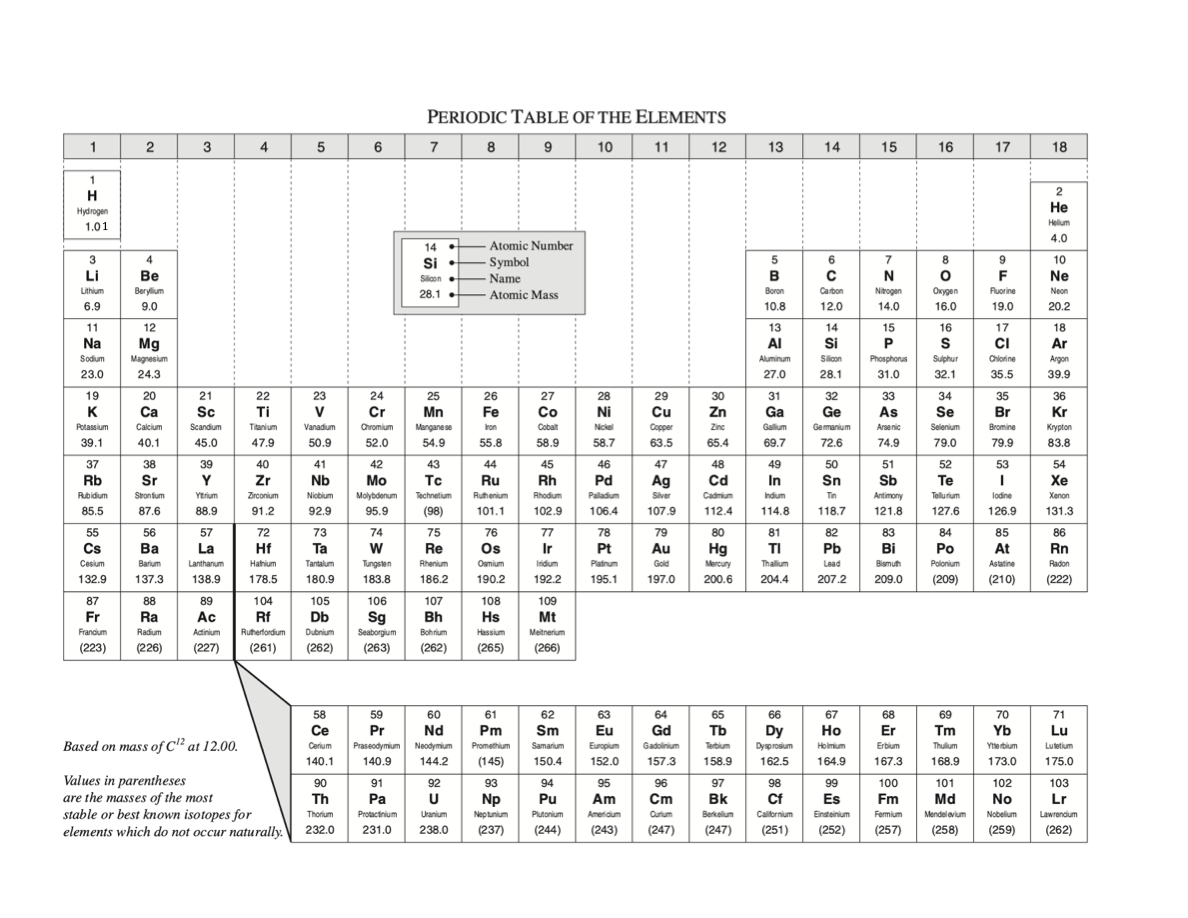
A chemical formula such as CO2 shows the ratio of atoms. Percentage composition tells you the proportion by mass. Chemists use it to assess purity (compare experimental to theoretical), verify compound identity from elemental analysis, and support stoichiometry calculations.
Compound explorer
Carbon dioxide
CO2
Molar mass44.01 g/mol
Elements2
Type any formula
Supports brackets — Ca(NO3)2, Al2(SO4)3 — and hydrate dots — CuSO4.5H2O or CuSO4·5H2O.
Real-world applications
Forensics
Drug identification in a crime lab
A seized powder is burned in an elemental analyser. The measured percentages are matched against a reference database. Methamphetamine C₁₀H₁₅N has a unique signature of 80.48 % C, 10.13 % H, 9.39 % N — if the sample matches within experimental error, the identity is confirmed in court.
Nutrition
What's actually in a sugar cube
Table sugar is sucrose, C₁₂H₂₂O₁₁ (342.30 g/mol). By mass it is 42.11 % carbon, 6.48 % hydrogen and 51.42 % oxygen. Food scientists use percentage composition to calculate calorie content and to verify that a product's label matches what is really in the package.
Determining Empirical Formula
'Empirical' means 'by experiment' — the simplest whole-number ratio of atoms
Step 1
Percent to mass
Step 2
Mass to mole
Step 3
Divide by small
Step 4
Multiply 'til whole
Step-by-step solver
Presets
The four steps
StepWhat you do
1Find the grams of each element. If given percentages, assume 100.0 g — then grams = the percentage.
2Convert grams → moles using n = m / M. Write the mole amounts as subscripts.
3Divide every subscript by the smallest value in the set.
4If any subscript is not near a whole number, multiply all of them by the smallest factor that fixes it. (Not always needed.)
Real-world applications
Elemental analysis
Combustion analysis
A weighed sample is burned in excess O₂. All carbon becomes CO₂ and all hydrogen becomes H₂O. Two absorbent traps are weighed before and after — the mass gained gives the mass of CO₂ and H₂O, and from those the mass of C and H in the original sample. Oxygen is found by difference.
Instrumentation
Mass spectrometry
Molecules are ionised, accelerated, then bent by a magnetic field. Lighter ions bend more, so each mass-to-charge ratio lands at its own point on the detector. The tallest peak at high m/z is the whole molecule — giving the molar mass you need to turn an empirical formula into a molecular one.
Determining Molecular Formula
The true formula — always a whole-number multiple of the empirical formula
Empirical vs molecular
The empirical formula is the smallest whole-number ratio of atoms.
The molecular formula is the actual number of atoms in one molecule.
They are always multiples of one another.
MolecularEmpiricalMultiple
P4O10P2O5×2
C10H22C5H11×2
C6H18O3C2H6O×3
C5H12OC5H12O×1
N2O4NO2×2
Molecular formula calculator
g/mol
The three steps
StepWhat you do
1Calculate the molar mass of the empirical formula (mm EF).
2Divide: mm MF ÷ mm EF. This gives a simple whole number.
3Multiply every subscript in the empirical formula by that factor.
If the division does not come out close to a whole number, something is wrong — recheck the empirical formula or the molar mass. A real answer is within about ±0.1 of an integer.
Real-world applications
Same ratio, different molecule
One empirical formula, three compounds
Formaldehyde CH₂O (embalming fluid), acetic acid C₂H₄O₂ (vinegar) and glucose C₆H₁₂O₆ (blood sugar) all share the empirical formula CH₂O. Percentage composition alone cannot tell them apart — you need the molar mass to find which multiple you actually have.
Pharmaceutical QC
Aspirin synthesis & verification
Salicylic acid + acetic anhydride → aspirin, C₉H₈O₄ (180.2 g/mol). Chemists confirm the product by combustion analysis plus mass spec. Because 9, 8 and 4 share no common factor, aspirin's empirical formula is already C₉H₈O₄ — the multiple is ×1.
Hydrates
Salts that carry water inside their crystal lattice
Hydration & dehydration
0 %
FormulaCuSO₄·5H₂O
Waters remaining5
ColourBlue
StateHydrated
In a hydrate the water sits inside the ionic crystal lattice, but it is only weakly bonded — heating drives it off. What remains is the anhydrous salt. The colour change of copper(II) sulfate (blue ⇌ white) is dramatic enough to be used as a chemical test for water.
Naming hydrates
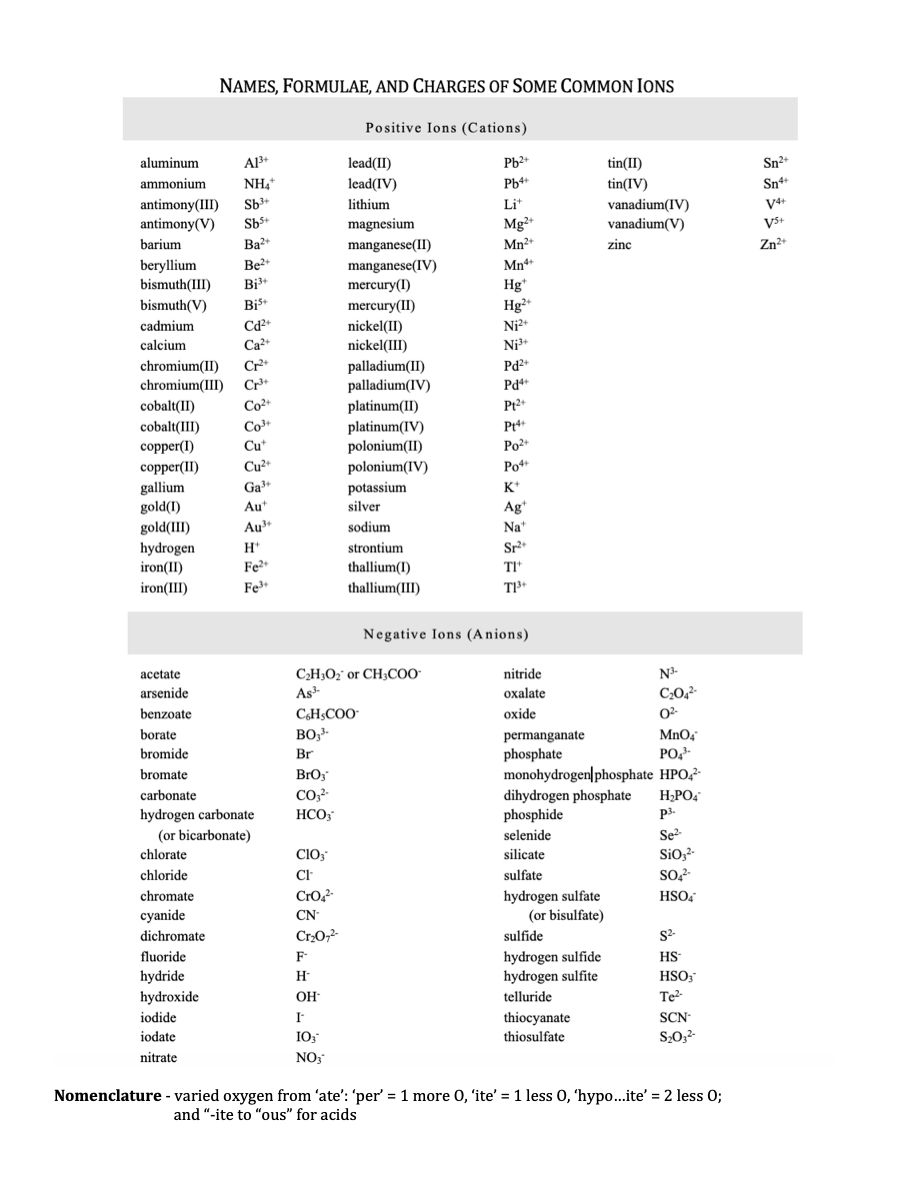
1. Name the ionic compound first, ignoring the water — Ba(OH)2·8H2O → "barium hydroxide".
2. Add a Greek prefix (including mono) to the word "hydrate" for the number of waters → "octahydrate".
Note: separate the salt from the waters with a centred dot in the formula, but not in the name.
Click a prefix
Practice
FormulaName
MgSO4·7H2Omagnesium sulfate heptahydrate
Fe(OH)3·3H2Oiron(III) hydroxide trihydrate
PbS2·6H2Olead(IV) sulfide hexahydrate
Na2SO4·10H2Osodium sulfate decahydrate
% water by mass
% H2O = (# H2O molecules)(molar mass of H2O) × 100
molar mass of hydrate
Find the formula of a hydrate
Real-world applications
Classic lab test
Heating blue copper(II) sulfate
Blue CuSO₄·5H₂O heated in a crucible turns white anhydrous CuSO₄ as steam escapes — a mass loss of 36.08 %. The reaction reverses instantly on contact with water, which makes white CuSO₄ a sensitive test for the presence of water in a liquid.
Packaging
Silica gel desiccant packets
Those "DO NOT EAT" packets protect electronics and medicines by pulling water vapour out of the air. Many contain CoCl₂ indicator beads that are blue when dry and turn pink as CoCl₂·6H₂O forms — a visual signal that the desiccant is spent. Baking it drives the water back off and regenerates it.
Quantities Kahoot
25 questions · 20 seconds each · Speed bonus scoring
🔬
Ready to test your knowledge?
Covers percentage composition, empirical formula, molecular formula & hydrates
25
Questions
20s
Per question
1000
Max points
Summary
Quick reference
ConceptDefinitionKey equation
Percentage compositionProportion by mass of an element in a compound% X = (# atoms × atomic mass) / molar mass × 100
Empirical formulaSmallest whole-number ratio of atomsn = m / M, then divide by smallest
Molecular formulaActual number of atoms in one moleculefactor = mm MF / mm EF
HydrateSalt with water in its crystal latticex = mol H₂O / mol anhydrate
AnhydrousThe salt after all water has been driven offm(H₂O) = m(hydrate) − m(anhydrate)
% water in a hydrateMass fraction of the waters of hydration% H₂O = (x × 18.02) / mm hydrate × 100
The rhyme: Percent to mass · Mass to mole · Divide by small · Multiply 'til whole
Watch out: ratios ending in .5 → ×2  ·  .33 or .67 → ×3  ·  .25 or .75 → ×4
Remember: the molecular formula is always a whole-number multiple of the empirical formula (sometimes ×1).
Greek prefixes for hydrates
12345678910
monoditritetrapentahexaheptaoctanonadeca