Gas Laws — Interactive Study Tool

SCH3U · Unit 4 — Miss Peters & Class · Click a topic below

Kinetic Molecular Theory
Ideal vs Real gases — particle behaviour
Toggle between ideal and real gas. In a real gas, watch particles attract each other and collisions transfer energy (flashes on impact).
200 K
— elastic collisions, no IMFs
ideal gas simulation
Avg speed
Avg KE
Collisions0
ModeIdeal
Ideal gas: point-sized particles · perfectly elastic collisions (no energy lost) · no IMFs · KE ∝ T
Real gas: particles have volume · collisions lose energy (watch the flash) · IMFs pull particles together at low T or high P.
Boyle's Law
Constant temperature · P ∝ 1/V · P₁V₁ = P₂V₂
P₁V₁ = P₂V₂
Push the piston down — same number of particles squeezed into less space → more wall collisions → higher pressure.
8.0 L
Volume8.0 L
Pressure
P × V (const.)
Piston (primary)
P-V graph (secondary)
P × V = constant at constant temperature. The graph is a hyperbola. Double V → half P. Halve V → double P.

Real-World Applications
Medical Syringe
Boyle's Law
Pulling the plunger back increases the volume inside the barrel. Pressure drops below atmospheric, and fluid is pushed into the syringe by the higher external pressure. P₁V₁ = P₂V₂ in action.
Scuba Diving & the Bends
Boyle's Law
At depth, high pressure compresses dissolved gas in blood. If a diver ascends too fast, pressure drops quickly and dissolved N₂ expands into bubbles — causing decompression sickness (the bends).
Chip Bag on a Plane
Boyle's Law
At cruising altitude, cabin pressure is lower than at ground level. The gas inside the sealed chip bag expands (lower P → higher V), making the bag puff up noticeably.
Charles' Law
Constant pressure · V ∝ T · V₁/T₁ = V₂/T₂
V₁/T₁ = V₂/T₂
Heat the gas — faster particles push the piston up to maintain constant pressure. Cool it — piston drops.
300 K
Temperature300 K
Volume
V / T (const.)
Piston (primary)
V-T graph (secondary)
Direct relationship — V and T move together. Graph is a straight line. At −273°C (0 K) volume → 0. Always use Kelvin!

Real-World Applications
Hot Air Balloon
Charles' Law
A burner heats the air inside the balloon. Higher T → gas expands → density decreases below surrounding cool air → buoyant force lifts the balloon. Cooling the air makes it descend.
Basketball in the Cold
Charles' Law
Leave a basketball outside on a winter day — it feels flat. The cold air (low T) reduces the volume of gas inside the ball. Bring it inside and it re-inflates as T rises.
Bread Rising in the Oven
Charles' Law
CO₂ bubbles from yeast are trapped in dough. In the hot oven, the gas expands (V ∝ T) — the bubbles grow, pushing the dough upward and giving bread its fluffy texture.
Gay-Lussac's Law
Constant volume · P ∝ T · P₁/T₁ = P₂/T₂
P₁/T₁ = P₂/T₂
Rigid sealed container — heat increases particle speed → more forceful wall hits → pressure rises. The piston does NOT move.
300 K
Temperature300 K
Pressure
P / T (const.)
Sealed container (primary)
P-T graph (secondary)
Tire analogy: Cold morning → lower pressure. After driving → tires heat up → pressure rises. Volume stays fixed. That's Gay-Lussac's Law.

Real-World Applications
Aerosol Can Warning
Gay-Lussac's Law
"Do not expose to temperatures above 50°C." The can is a rigid container (constant V). Heating increases gas pressure inside — if P exceeds the can's structural limit, it explodes.
Pressure Cooker
Gay-Lussac's Law
A sealed pot with a fixed volume. Heating raises internal pressure, which raises the boiling point of water above 100°C. Food cooks faster at higher temperatures and pressures.
Car Tire Pressure
Gay-Lussac's Law
After highway driving, friction heats the tires. The air inside the rigid tire (constant V) increases in temperature → pressure rises. That's why TPMS readings are higher after a long drive.
Avogadro's Law
Constant T and P · V ∝ n · V₁/n₁ = V₂/n₂
V₁/n₁ = V₂/n₂
Blow more air into the balloon — more moles of gas → balloon visibly expands. Same T, same P throughout.
1.0 mol
Moles1.0 mol
Volume
V / n (const.)
At STP, 1 mole of any ideal gas = 22.4 L. H₂, O₂, CO₂ — doesn't matter. Same moles, same volume. The balloon shows this directly.

Real-World Applications
Breathing & Lungs
Avogadro's Law
When you inhale, your diaphragm contracts and pulls air molecules into your lungs. More moles of gas enter → lung volume increases. Exhale and moles leave → volume decreases. V ∝ n in action.
Bicycle Pump
Avogadro's Law
Each pump stroke pushes more moles of air into the tire. As n increases at roughly constant T and P, the tire inflates — its volume grows proportionally to the moles added.
Car Airbag
Avogadro's Law
On impact, NaN₃ decomposes rapidly producing N₂ gas. A huge number of moles are generated in milliseconds — the volume of the bag inflates almost instantly to cushion the occupant.
Ideal Gas Law
PV = nRT — all four variables
PV = nRT
Set n, T, and V — P is calculated. R = 8.314 L·kPa/mol·K
1.0
300
10.0
Calculated Pressure
kPa
— atm
R merges Boyle's, Charles', and Avogadro's constants. Use R = 8.314 for kPa, R = 0.08206 for atm.
Combined Gas Law
P₁V₁/T₁ = P₂V₂/T₂ — solve for any variable
P₁V₁/T₁ = P₂V₂/T₂
Choose which variable to solve for, then set the other five.
Solve for:
P₁
Initial pressure
V₁
Initial volume
T₁
Initial temp
P₂
Final pressure
V₂
Final volume
T₂
Final temp
State 1
1.0
10.0
300
State 2
2.0
5.0
400
Solving for P₁ =
atm
Simplifications: constant T → Boyle's (P₁V₁=P₂V₂) · constant P → Charles' (V₁/T₁=V₂/T₂) · constant V → Gay-Lussac's (P₁/T₁=P₂/T₂).
Dalton's Law of Partial Pressures
P_total = P_A + P_B + ... · Collecting gas over water
Ptotal = PA + PB + PC
Partial pressure mixer
80
60
40
P_total
Collecting gas over water
20°C
P_total
P_H₂O
P_dry gas
Collecting gas over water: When gas is collected by water displacement, the collected gas is wet — it contains water vapour. Use Pdry gas = Ptotal − PH₂O. The water vapour pressure depends only on temperature (see vapour pressure table).

Real-World Applications
Earth's Atmosphere
Dalton's Law
Atmospheric pressure (101.3 kPa) is the sum of partial pressures: ~78 kPa from N₂, ~21 kPa from O₂, and small contributions from Ar, CO₂, and other trace gases.
Scuba Tank Gas Mix
Dalton's Law
Divers use Nitrox (enriched air) to reduce N₂ partial pressure at depth. At 30 m, total pressure is ~4 atm — controlling each gas's partial pressure prevents nitrogen narcosis and oxygen toxicity.
Humidity & Weather
Dalton's Law
Water vapour adds its own partial pressure to the atmosphere. When P_H₂O reaches the saturation vapour pressure at a given temperature, condensation occurs — forming clouds, dew, and fog.
Graham's Law of Effusion
r₁/r₂ = √(mm₂/mm₁) — lighter = faster
r₁/r₂ = √(mm₂/mm₁)
Set molar masses. Lighter gas travels faster — they meet closer to the heavy gas side.
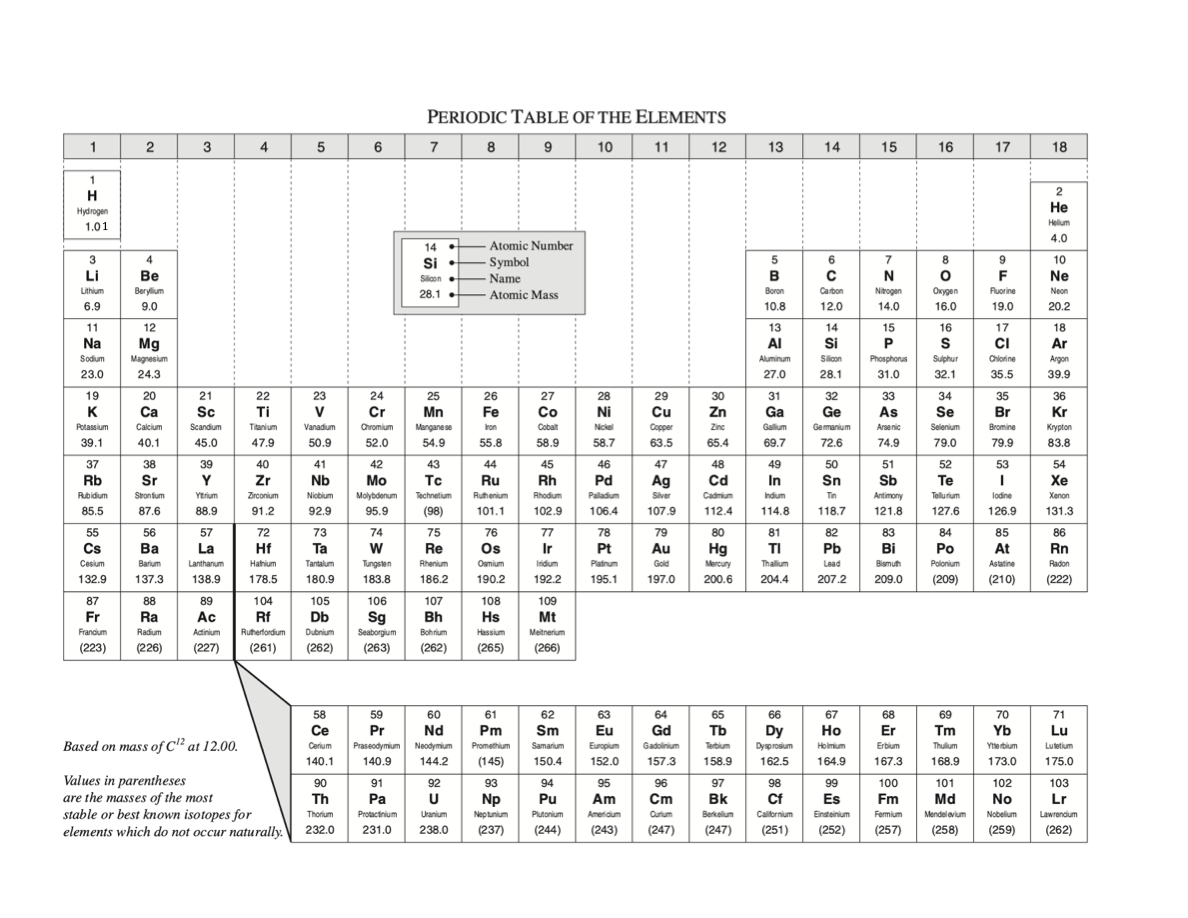
17 g/mol
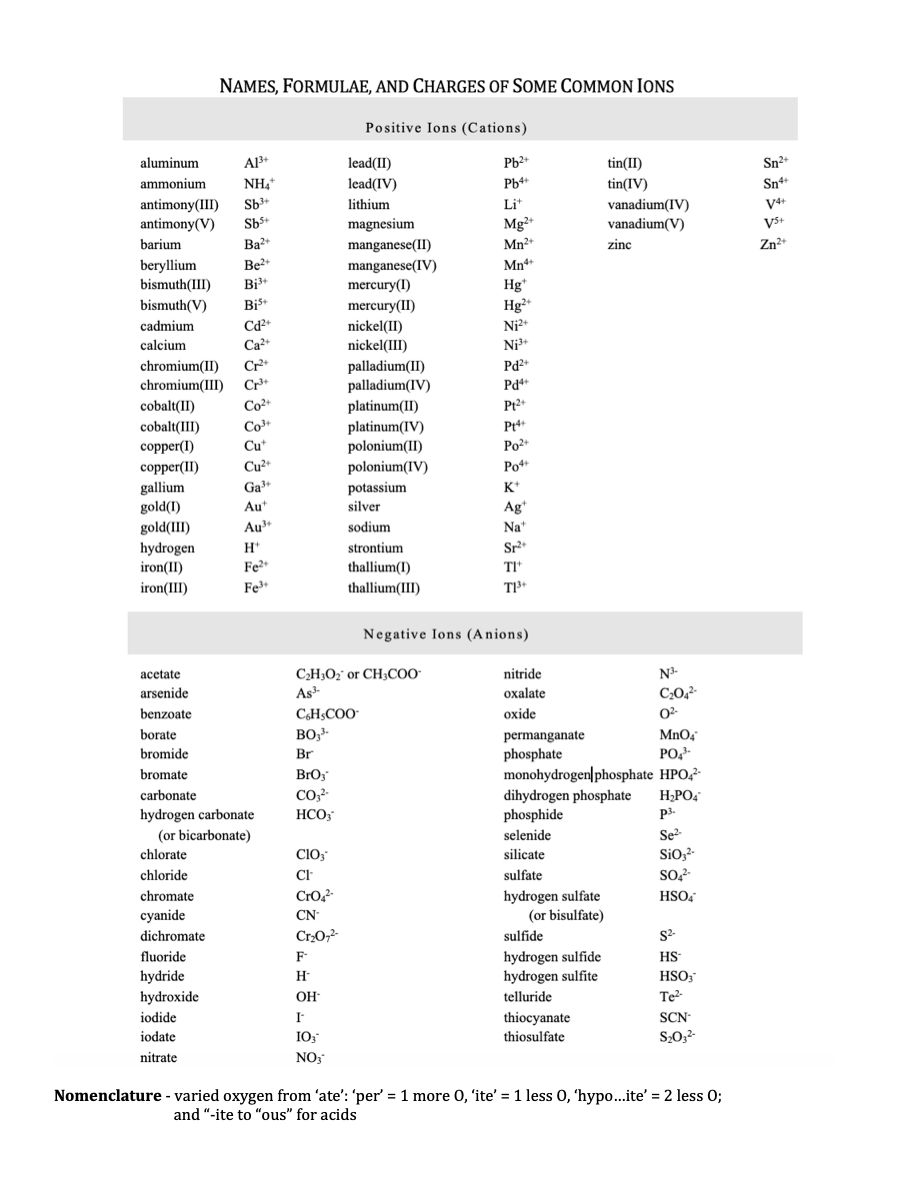
NH₃=17 · H₂=2 · O₂=32 · HCl=36.5 · CO₂=44 · Kr=84
36 g/mol
Gas 1 rate
Gas 2 rate
Rate ratio
Meet at
Gas 1 → ← Gas 2
All gases at the same T have the same average KE = ½mv². Lighter mass → must move faster. NH₄Cl smoke ring forms closer to HCl end because NH₃ (lighter) travels farther.

Real-World Applications
Perfume Diffusion
Graham's Law
Lighter perfume molecules diffuse faster through air. You smell perfume across the room because volatile molecules (low molar mass) travel rapidly from high to low concentration.
Uranium Enrichment
Graham's Law
UF₆ with lighter U-235 diffuses slightly faster than U-238 UF₆. Gaseous diffusion plants exploit this tiny rate difference over thousands of stages to enrich uranium.
Helium Balloon Deflating
Graham's Law
Helium (4 g/mol) effuses through tiny pores in latex ~2.7× faster than O₂ (32 g/mol). That's why helium balloons go flat overnight while air-filled ones last weeks.
Summary of All Gas Laws
Quick reference
LawFormulaConstantRelationshipKey idea
Boyle'sP₁V₁ = P₂V₂T, nInverse P↑ V↓Squeeze → more wall hits
Charles'V₁/T₁ = V₂/T₂P, nDirect V↑ T↑Heat → piston rises
Gay-Lussac'sP₁/T₁ = P₂/T₂V, nDirect P↑ T↑Heat sealed tank → P rises
Avogadro'sV₁/n₁ = V₂/n₂T, PDirect V↑ n↑More moles → balloon grows
Ideal GasPV = nRTAll four varsR = 8.314 (kPa) or 0.08206 (atm)
CombinedP₁V₁/T₁ = P₂V₂/T₂nSolve any varBoyle + Charles + Gay-Lussac
Dalton'sP_tot = ΣP_iT, VAdditiveP_dry = P_total − P_H₂O
Graham'sr₁/r₂ = √(mm₂/mm₁)T, PInverse √Lighter = faster effusion
Always: T in Kelvin (K = °C + 273). For PV = nRT match R to pressure units.