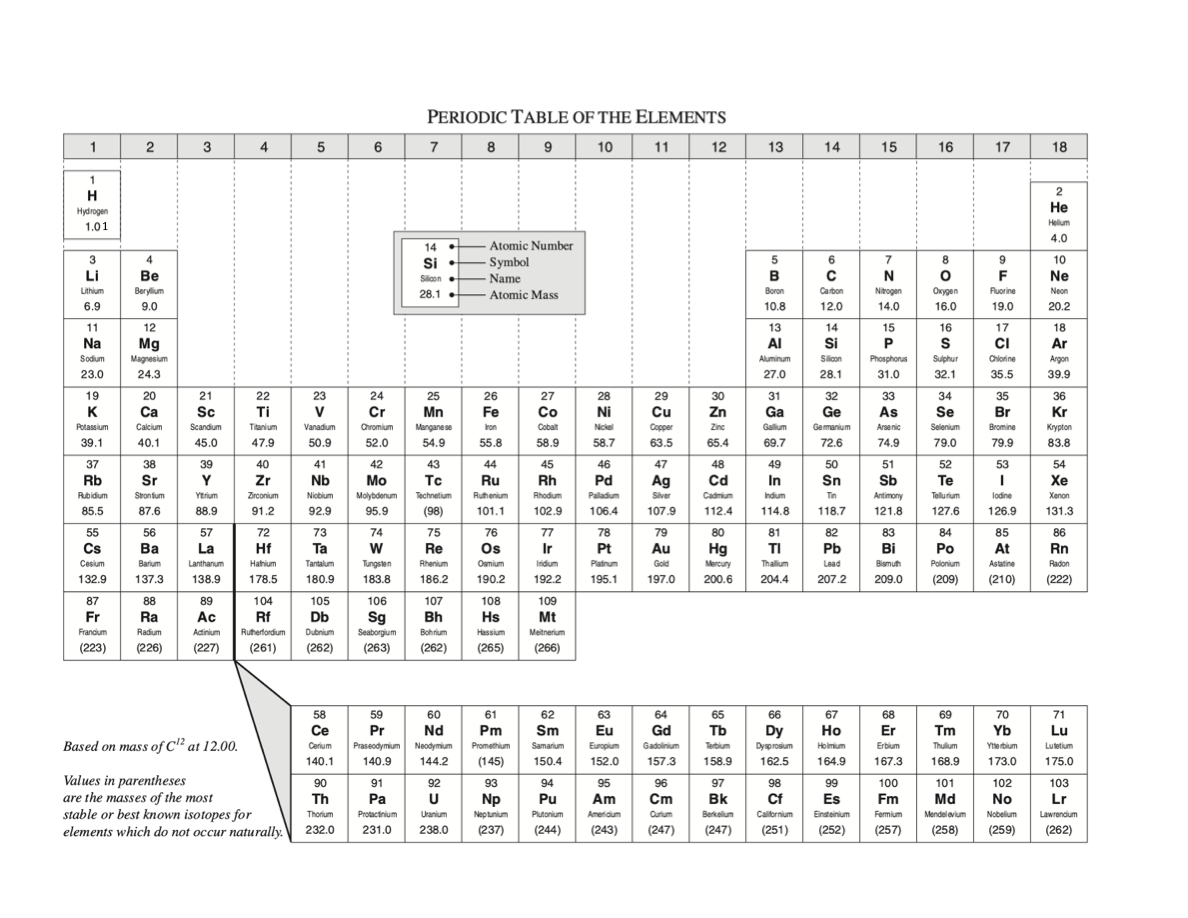
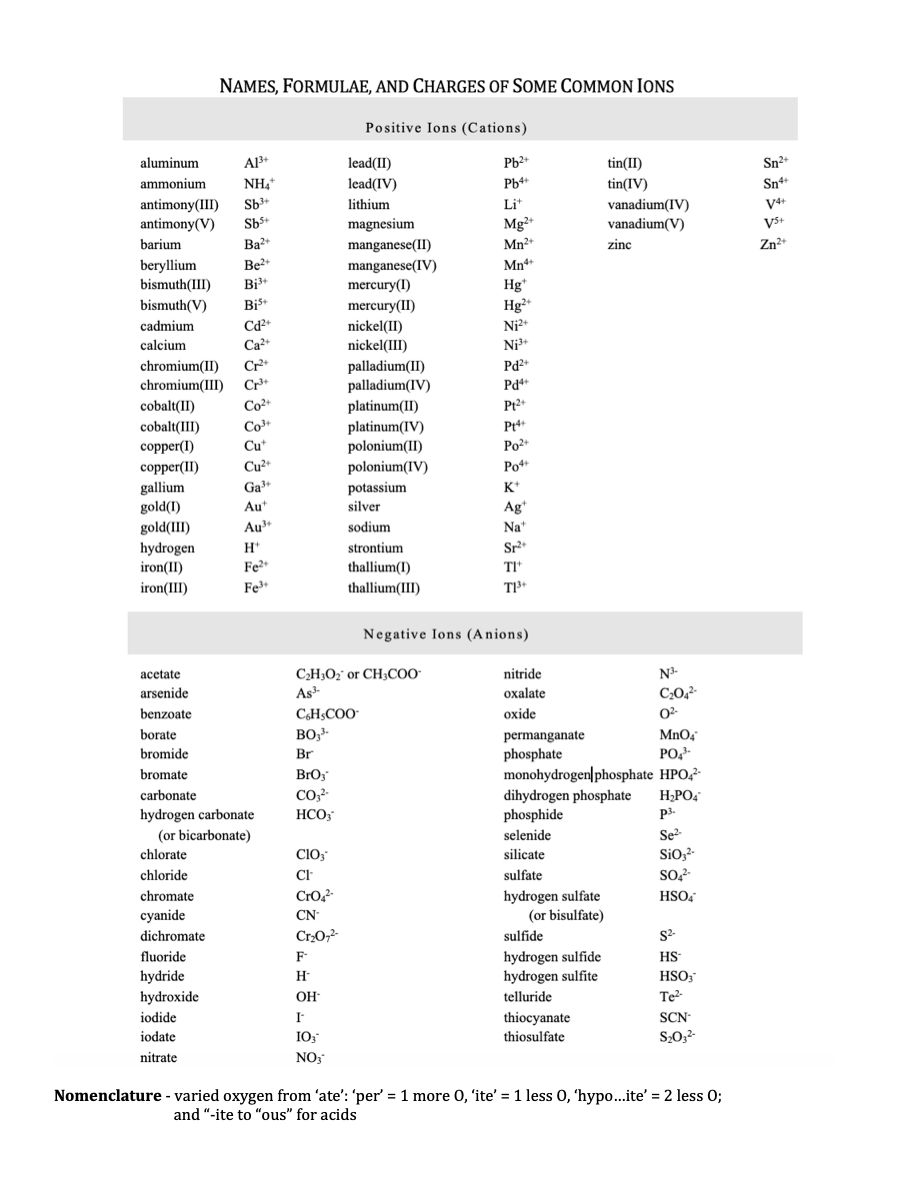
Acids & Bases

SCH3U · Miss Peters · Nomenclature · Properties · pH · Neutralization · Titration

Nomenclature of Acids & Bases
How to name and write formulas for acids and bases
Click a compound to see its name built step by step.
HCl
3 rules to remember:
Binary acid (H + nonmetal): hydro___ic acid  ·  Ternary acid (H + polyatomic with O): ___ic acid  ·  Base (metal + OH⁻): ___ hydroxide. Exception: NH₃ = ammonia.
Everyday acids & bases — nomenclature in action
Binary Acid
Vinegar — acetic acid
CH₃COOH (acetic acid) is an organic acid — its H is written at the end. Vinegar is ~5% acetic acid in water. The sour taste is your tongue detecting H⁺ ions.
Base
Baking soda — sodium bicarbonate
NaHCO₃ is sodium hydrogen carbonate (baking soda). It's a weak base. Mixed with an acid (vinegar), it neutralizes to produce CO₂ — the bubbles that make baked goods rise!
Ternary Acid
Lemon juice — citric acid
Lemons contain citric acid (C₆H₈O₇), a triprotic acid that donates up to 3 H⁺ ions. pH ≈ 2–3. The sour taste you feel is classic acid behaviour — H⁺ ions reacting with your taste receptors.
Properties of Acids & Bases
Observable and chemical properties
Acids
● Sour taste (e.g. vinegar, lemons)
● Corrosive — harsh on skin
● React with metals → H₂ gas
● React with carbonates → CO₂
● Turn blue litmus red
● pH < 7  ·  Electrolytes
Bases
● Bitter taste (e.g. baking soda)
● Slippery feel (soap, bleach)
● Caustic — dissolve organic matter
● Turn red litmus blue
● pH > 7  ·  Electrolytes
● Neutralize acids → salt + water
Arrhenius definitions — ionization in water
Acid
HCl → H⁺(aq) + Cl⁻(aq)
Produces H⁺ ions in water
Base
NaOH → Na⁺(aq) + OH⁻(aq)
Produces OH⁻ ions in water
Ionization of Acids & Bases
Monoprotic vs polyprotic · strong vs weak dissociation
Pick an acid, then open the stopcock of ionization — watch each molecule dissociate and release its H⁺ ion(s).
TypeMonoprotic
H⁺ per molecule1
DissociationComplete
Monoprotic acids (e.g. HCl) release one H⁺ per molecule.   Polyprotic acids release more than one — H₂SO₄ is diprotic (2 H⁺), H₃PO₄ is triprotic (3 H⁺).   Strong acids ionize completely; weak acids (like CH₃COOH) only partially ionize — an equilibrium.
Ionization in action
Triprotic Acid
Phosphoric acid in cola
Colas contain H₃PO₄ (phosphoric acid) for tartness — a triprotic acid that can release 3 H⁺ ions in three steps. It gives soft drinks a pH near 2.5, which is why soda is hard on tooth enamel.
The pH Scale
Power of Hydrogen — measuring acidity
Drag the slider to explore the pH of common substances.
7.0
pH7.0
NatureNeutral
[H⁺] relativeNeutral
ExamplePure water
pH formula: pH = −log[H⁺]. Each unit change = 10× difference in H⁺ concentration. pH 3 is 10× more acidic than pH 4, and 100× more acidic than pH 5.
Indicators & pH Testing
How we detect acids and bases
Set the pH and watch each indicator change colour.
7.0
Indicators are chemical substances that change colour at specific pH ranges. A good indicator has a sharp, clear colour transition. Red cabbage juice is a natural indicator — it contains anthocyanins that change from red (acid) through purple (neutral) to green/yellow (base).
Neutralization Reactions
Acid + Base → Salt + Water
Mix an acid and a base — watch the pH change as the reaction proceeds.
50
50
Resulting pH7.0
SolutionNeutral
Example reaction:
HCl(aq) + NaOH(aq) → NaCl(aq) + H₂O(l)
acid + basesalt + water
Net ionic equation: H⁺(aq) + OH⁻(aq) → H₂O(l) — the spectator ions (Na⁺, Cl⁻) don't participate. This is always the net ionic equation for any strong acid + strong base neutralization.
Titration
Experimental neutralization — finding unknown concentration
Turn the stopcock to add NaOH from the burette into the HCl flask. Watch the phenolphthalein indicator change colour and the titration curve update live.
NaOH added0.00 mL
Current pH1.00
StageBefore EP
IndicatorColourless
Lab apparatus
Titration curve (live)
Equivalence point (EP): moles acid = moles base — pH = 7 for strong/strong.   End point: when the phenolphthalein turns pink and stays pink for 30 s.   Formula: n = C × V → stoichiometry → find unknown concentration. Note: C₁V₁ = C₂V₂ is for dilutions only — NOT titrations!
Sources of Error — Equivalence Point vs End Point
The colour change (end point) always lags slightly behind the true equivalence point. Watch the zoomed curve — the indicator flips a fraction of a drop past where moles actually match.
1. Indicators are weak organic acids. Adding an indicator slightly increases the acidity of the flask, so a tiny bit of extra base is needed — a small systematic error present in every titration.
2. End point ≠ equivalence point. The equivalence point is where mol H⁺ = mol OH⁻ (true neutralization). The end point is where the indicator changes colour — just past the equivalence point. A good indicator makes this volume difference negligible.
Neutralization & Titration Calculations
n = C · V → mole ratio → solve for the unknown
Set up an acid–base titration. The solver walks the mole bridge and finds the unknown concentration step by step.
Acid
1.00
25
Base (titrant)
1.00
Balanced ratio (A : B)1 : 1
Base vol needed— mL
Balanced equation:
Method: (1) balance the equation, (2) n(known) = C × V, (3) multiply by the mole ratio, (4) solve C = n/V or V = n/C. Remember: use the coefficient ratio, not C₁V₁ = C₂V₂ — this is a reaction, not a dilution.
Where these calculations are used
Analytical chemistry
Standardization & quality control
Factories titrate to check concentration — vinegar acidity, vitamin-C in juice, acid in a battery. A standard solution of known concentration is titrated against the sample, and n = C·V plus the mole ratio gives the unknown exactly.
Real-World Applications
Acids and bases in everyday life
Acids in the body
Stomach acid (HCl)
Your stomach produces HCl at pH 1.5–3.5 — strong enough to dissolve metal. It denatures proteins and kills bacteria. Antacids (NaHCO₃, Mg(OH)₂) neutralize excess acid: HCl + NaHCO₃ → NaCl + H₂O + CO₂.
Environmental
Acid rain
SO₂ and NO₂ from factories dissolve in rainwater: SO₂ + H₂O → H₂SO₃ (sulfurous acid). Normal rain pH ≈ 5.6 (CO₂ dissolved); acid rain pH can drop to 4 or lower, damaging ecosystems and corroding buildings.
Bases in daily life
Soap & cleaning products
Soap is made by saponification — reacting fats with NaOH (a base). Household cleaners like bleach (NaOCl) and drain cleaner (NaOH) are all strongly basic. The slippery feel of bases is your skin cells being gently dissolved!
Biology
Blood pH buffering
Human blood is maintained at pH 7.35–7.45 by the carbonic acid buffer system: CO₂ + H₂O ⇌ H₂CO₃ ⇌ H⁺ + HCO₃⁻. A drop to pH 7.0 (acidosis) or rise to 7.8 (alkalosis) is life-threatening.
Health
Tooth decay
Mouth bacteria produce acids (lactic acid, pH ~4.5) that dissolve tooth enamel (calcium phosphate). Toothpaste contains bases (fluoride compounds, CaCO₃) that neutralize mouth acids and re-harden enamel. Classic neutralization in your mouth!
Agriculture
Soil pH & farming
Most crops grow best at pH 6–7. Acidic soil (from acid rain or decomposition) is treated with lime (CaO or CaCO₃) to raise pH. Fertilizers can lower pH. Farmers test and adjust soil pH regularly — it's applied chemistry every season.
Acids & Bases Kahoot
25 questions · 20 seconds each · Speed bonus scoring
🧪
Ready to test your knowledge?
Covers nomenclature, properties, ionization, pH, indicators, neutralization, titration & calculations
25
Questions
20s
Per question
1000
Max points
Summary
Quick reference — acids & bases
PropertyAcidsBases
TasteSourBitter
FeelCorrosiveSlippery
LitmusBlue → RedRed → Blue
pH< 7> 7
Ions producedH⁺OH⁻
Arrhenius definitionProduces H⁺ in waterProduces OH⁻ in water
ExamplesHCl, H₂SO₄, HNO₃, CH₃COOHNaOH, Ca(OH)₂, NH₃
Naming (binary)hydro___ic acid___ hydroxide
Naming (ternary)___ic acid(same rule)
IonizationMono- (HCl) / poly-protic (H₂SO₄ diprotic, H₃PO₄ triprotic)Release OH⁻ (NaOH → Na⁺ + OH⁻)
Neutralization: Acid + Base → Salt + Water  ·  Net ionic: H⁺ + OH⁻ → H₂O
Titration: n = C×V, then stoichiometry  ·  Equivalence point ≠ End point (close but not always equal)
pH: 0–6 acid · 7 neutral · 8–14 base  ·  Each unit = 10× change in [H⁺]